Business in the AACHD
An overview of the district’s business ecosystem, its legacy, current economic realities, and the opportunities to strengthen Black-owned enterprises in a changing Austin economy.
Overview
This section examines the business landscape of the African American Cultural Heritage District, highlighting both its historic role as a home for Black-owned enterprises and its current economic realities. The data underscores the contributions of legacy businesses, the scale and character of commercial space, and the patterns of revenue and employment that shape opportunities for growth. Together, these insights reveal both the resilience of the district’s business community and the pressures it faces in adapting to Austin’s rapidly changing economy.
Key Findings
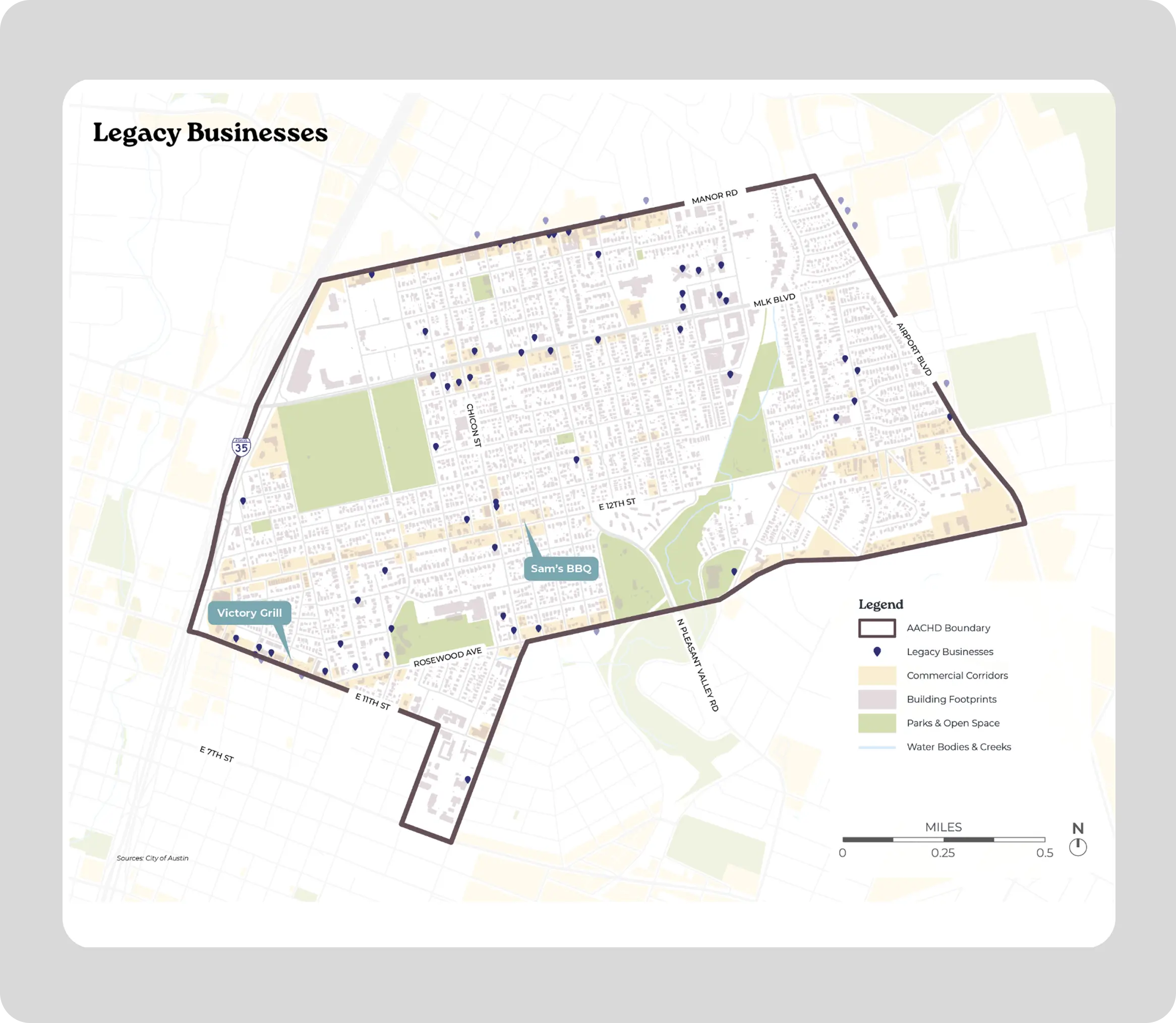
There are a total of 55 City-identified legacy businesses within the District.
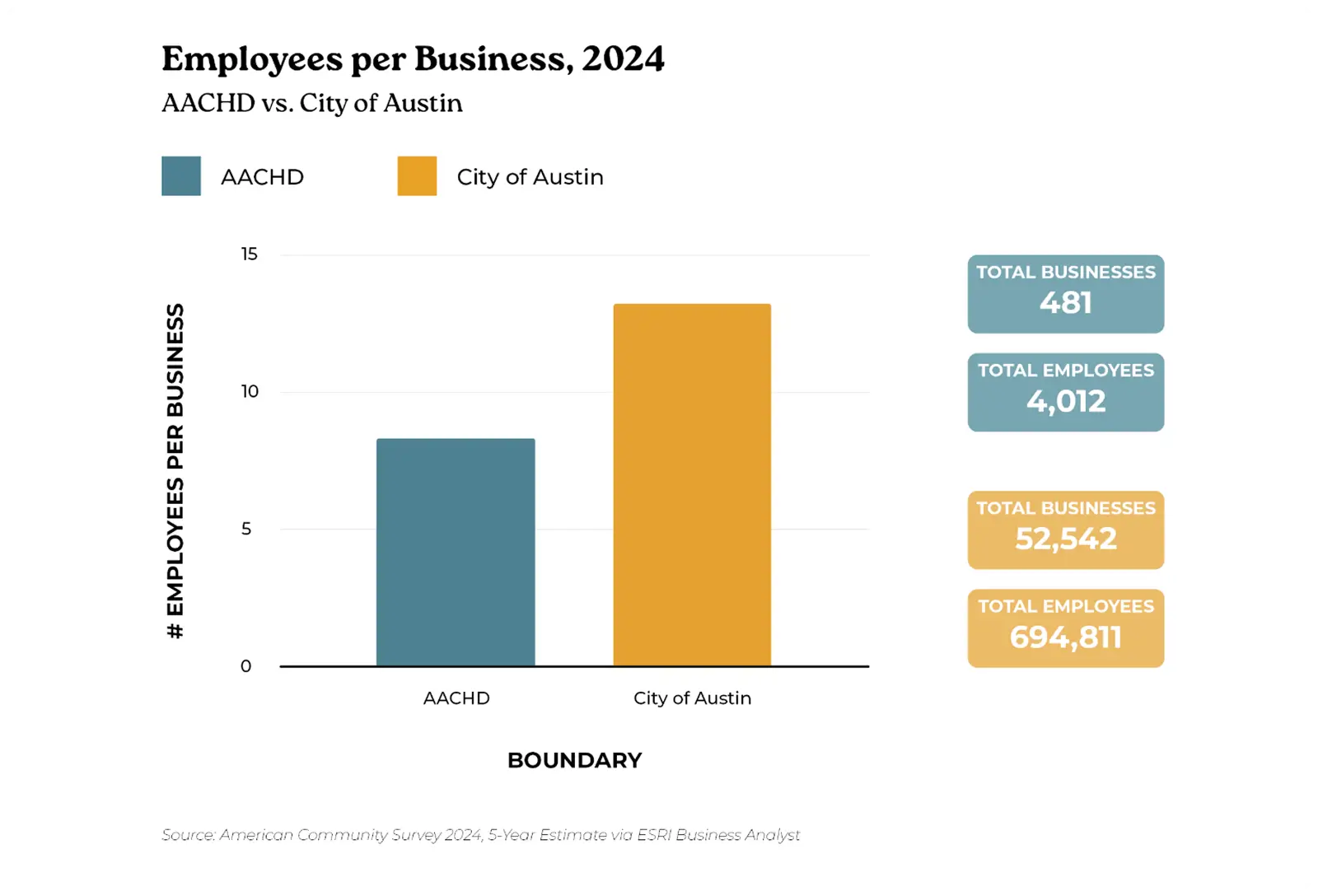
Businesses in the District have fewer employees on average compared to the City.
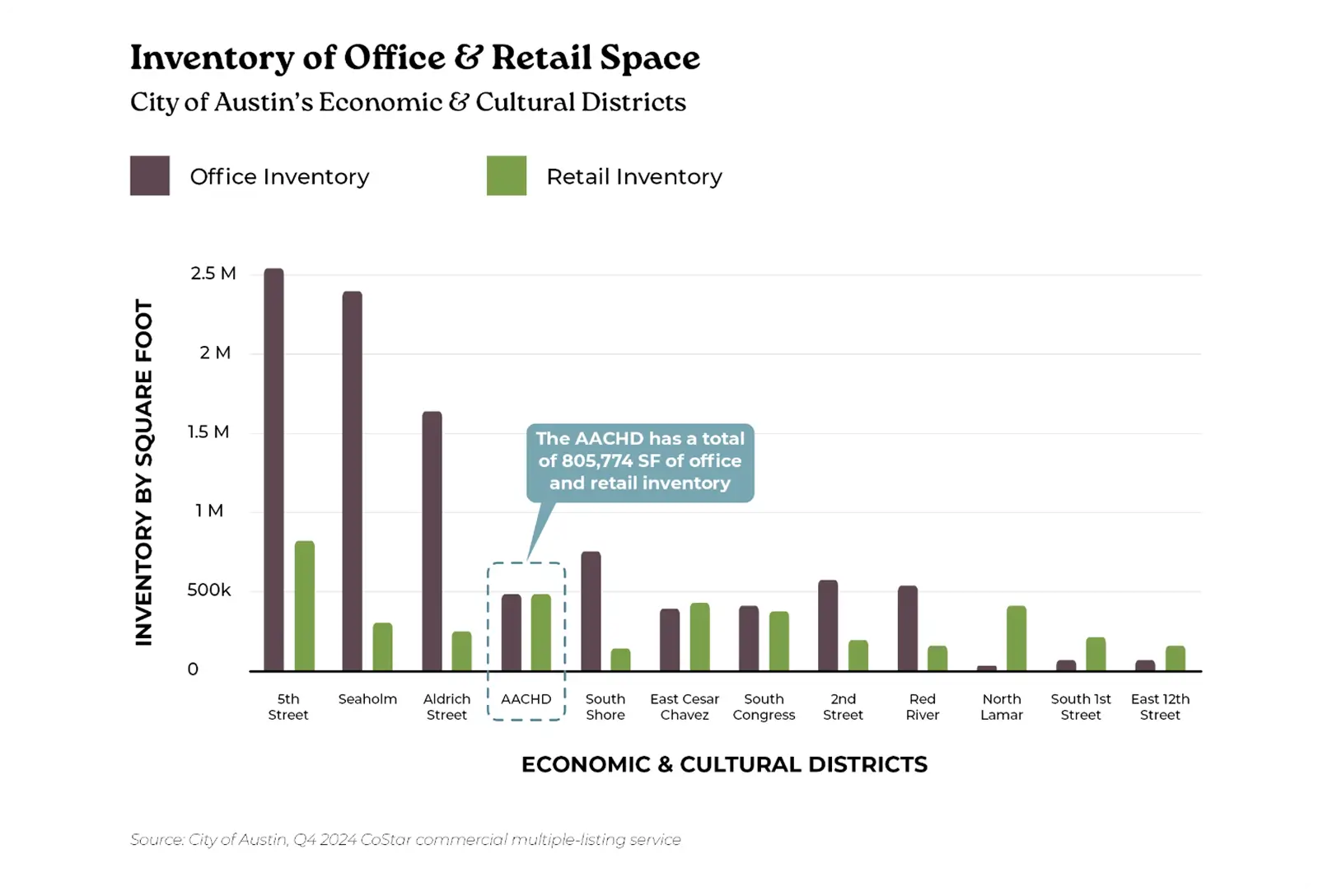
As of Summer 2024, there were 805,774 square feet of office and retail space.
Legacy Businesses & Organizations
East Austin, and within the African-American Cultural Heritage District Boundaries, has been the home of Black-owned businesses for generations. While there have been ebbs-and-flows of success, today the District is still the home to many businesses that provide some of its most prominent characteristics. Legacy businesses like Sam’s on 12th and Victory Grill have filled the bellies of East Austinites for decades. Despite this history, today the prevailing legacies of Black-owned businesses in the District are at a low point.
While many of these businesses are still around, a significant number of them have closed over the past several years as a result of declining revenue, rising rent, and the changing demographics of the neighborhood, where new residents don’t always value these important establishments in the same way East Austinites have in the past.

Business & Industries
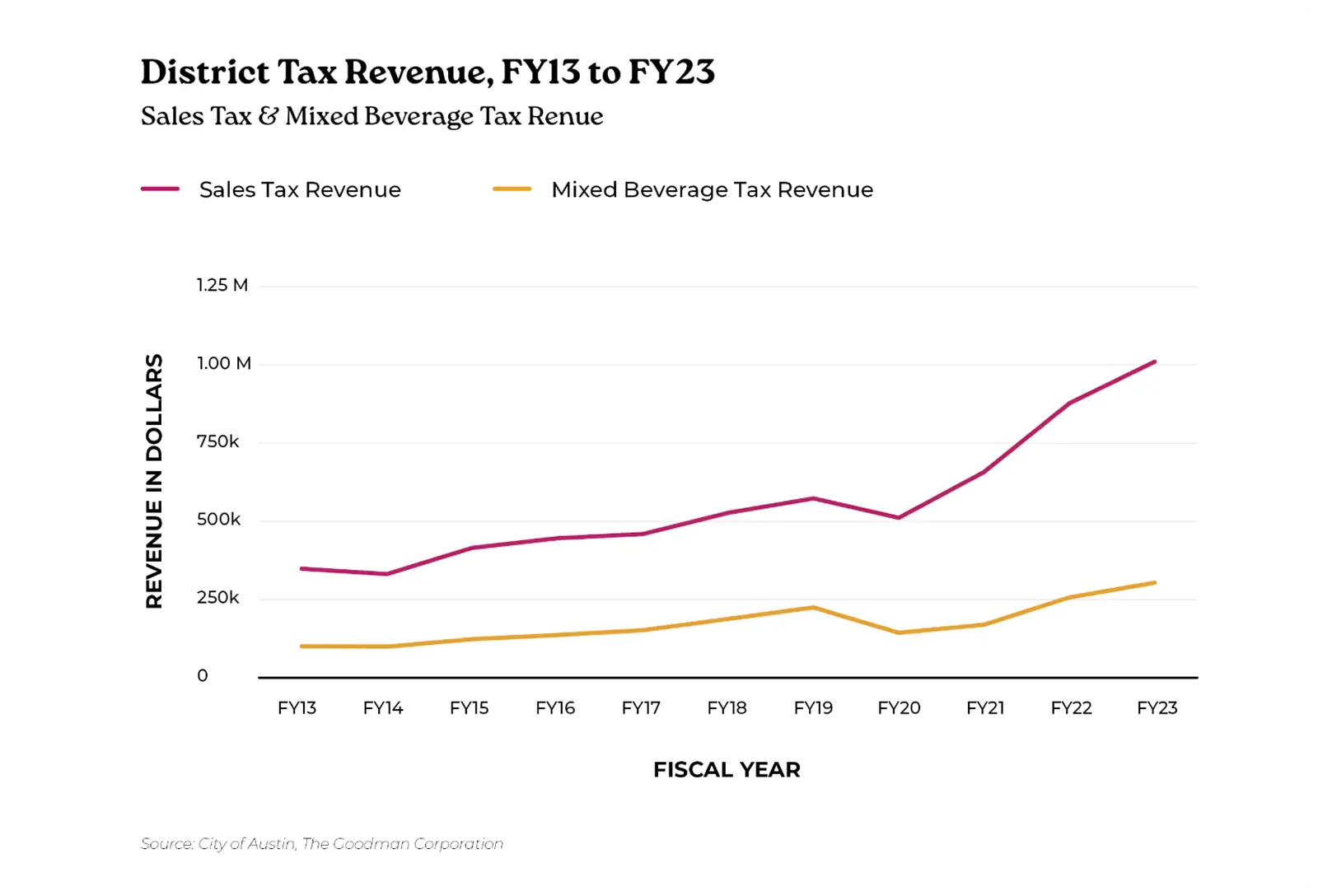
Businesses within the District have shown a steady increase in sales tax revenue and beverage tax revenue. In some measures, this reflects positive outcomes for businesses in East Austin. However, the data shows that the spread of the success is not as evenly distributed as it might be in other parts of the city. For example, businesses within the AACHD employ fewer people on average than businesses in Austin.
District Tax Revenue
Data shows a steady increase in sales and beverage tax revenues within the District, but the rate of growth has lagged behind Austin as a whole. While the city’s economy has boomed over the past decade, the AACHD has not shared equally in this prosperity. Coupled with rising infrastructure costs, the slower revenue growth presents a significant challenge for reinvestment in the District.
Inventory By Business Type
The AACHD contains just over 800,000 square feet of retail and office space. This footprint provides a foundation to strengthen the district’s identity by supporting businesses that reflect the needs of Black Austinites. The district also includes 85,000 square feet of industrial space, creating a diverse employment base beyond a single industry. Although some spaces are constrained by high rents or low quality, targeted public policy approaches can help align these assets with community needs and ensure the AACHD continues to serve as a hub for successful Black-owned enterprises in Austin.