Housing in the AACHD
Data-driven insights into housing conditions, population change, and development pressures shaping the district today.
Overview
This section presents demographic, housing, and development data that help explain the conditions facing the African American Cultural Heritage District today. Together, these indicators trace the lasting impacts of past policies, the shifting population and housing dynamics shaping the district, and the pressures residents face in securing affordable, stable housing. The data provide an essential foundation for understanding both the challenges and opportunities for preserving the district’s cultural identity and supporting its future.
Key Findings
The 1928 Master Plan and 1934 Redlining of Austin have had a significant impact on the real estate wealth of Black Austinites.
From 2010 to 2020, the percentage of Black and African American populations decreased in Austin, and increased in surrounding towns.
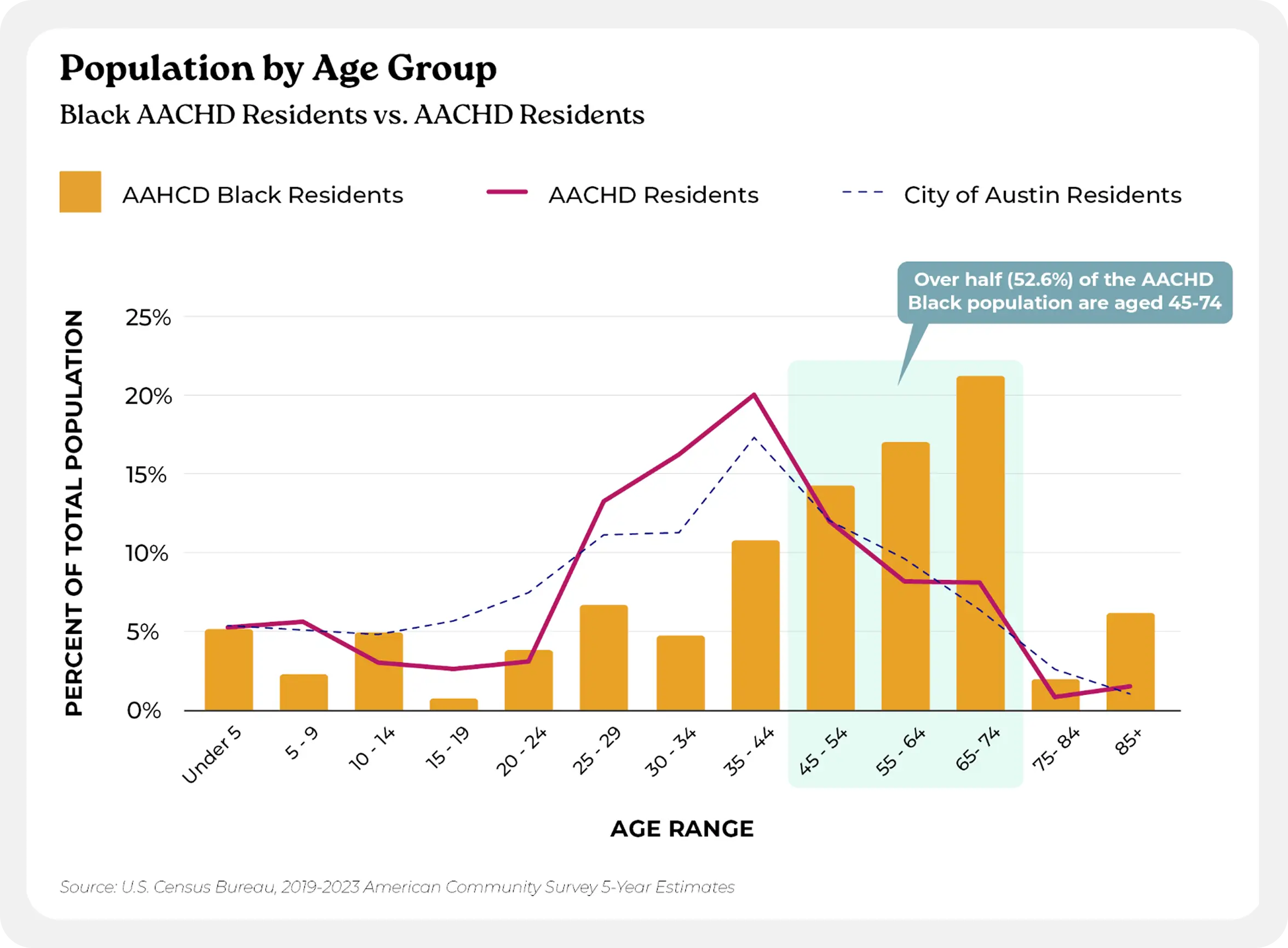
The age distribution shows Black residents in the District are older than City of Austin and all District residents.
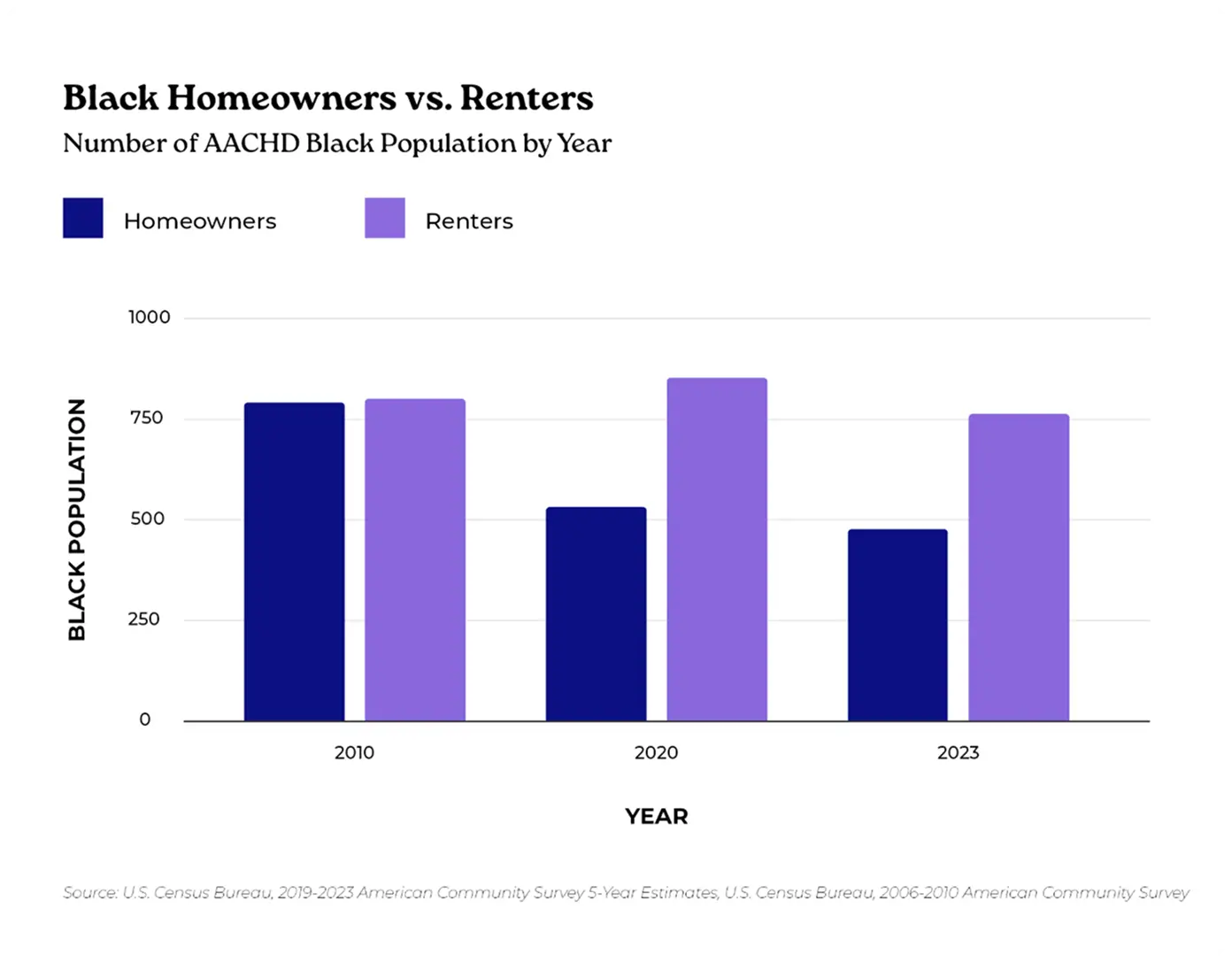
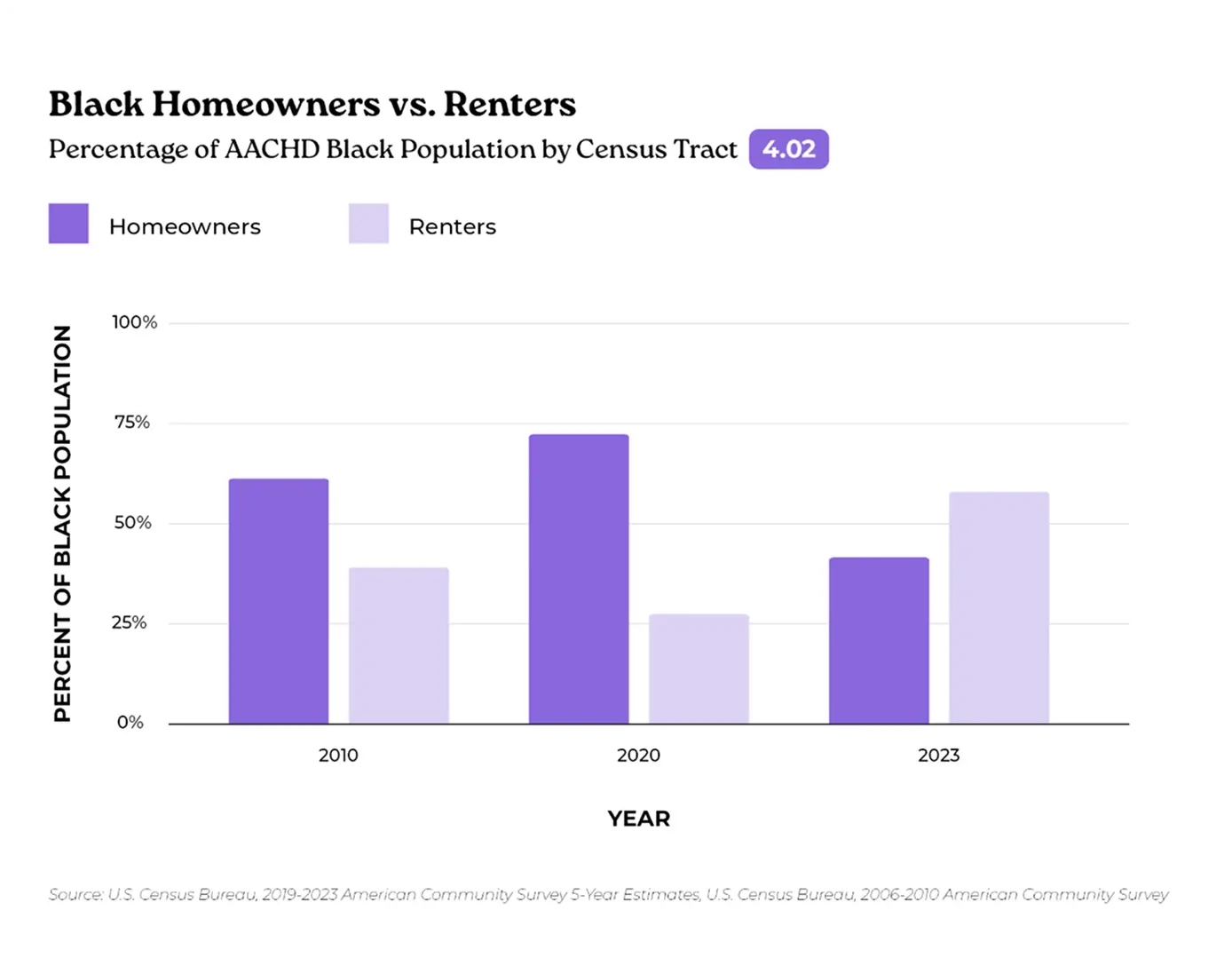
The number of Black homeowners in the district is decreasing.
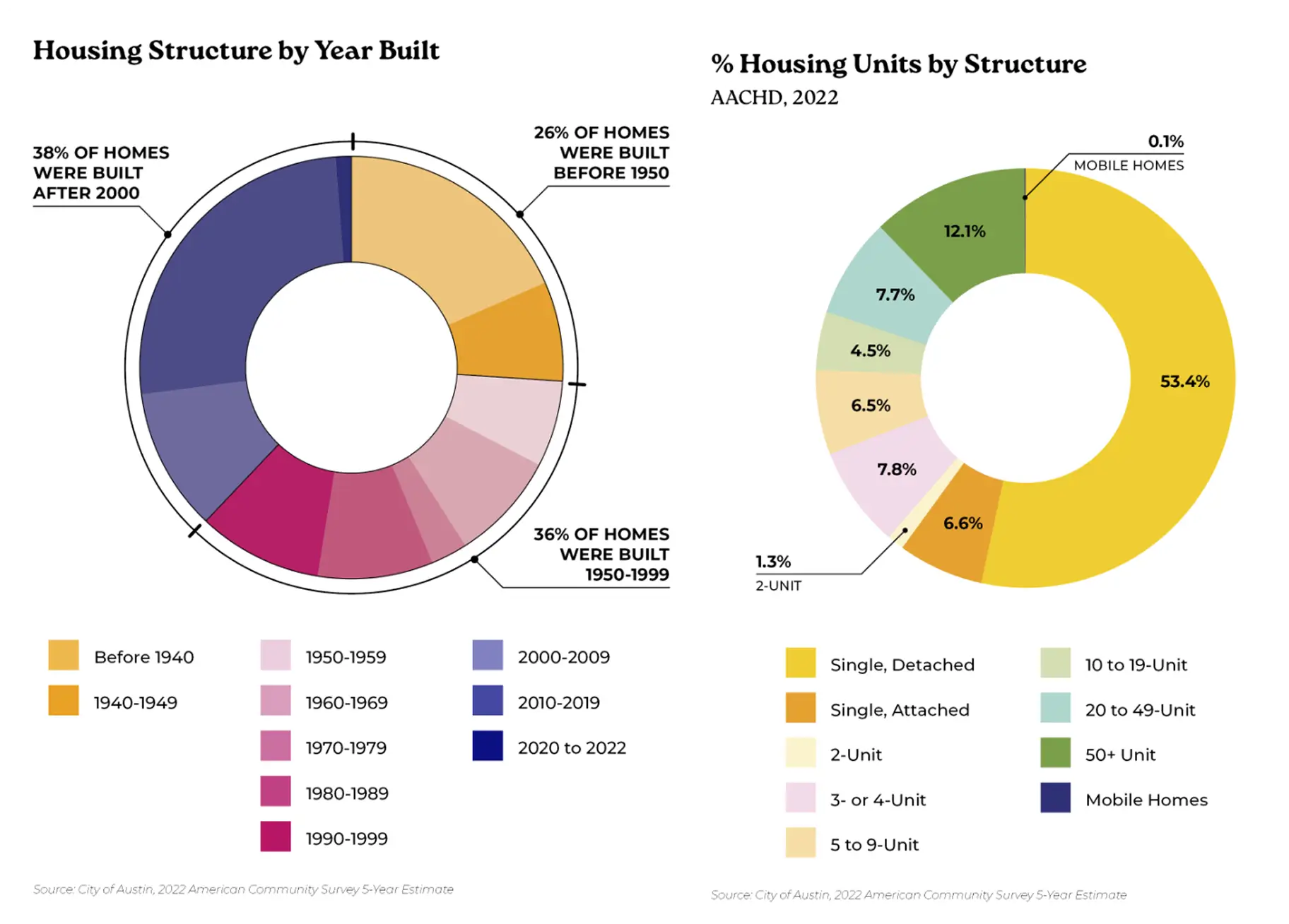
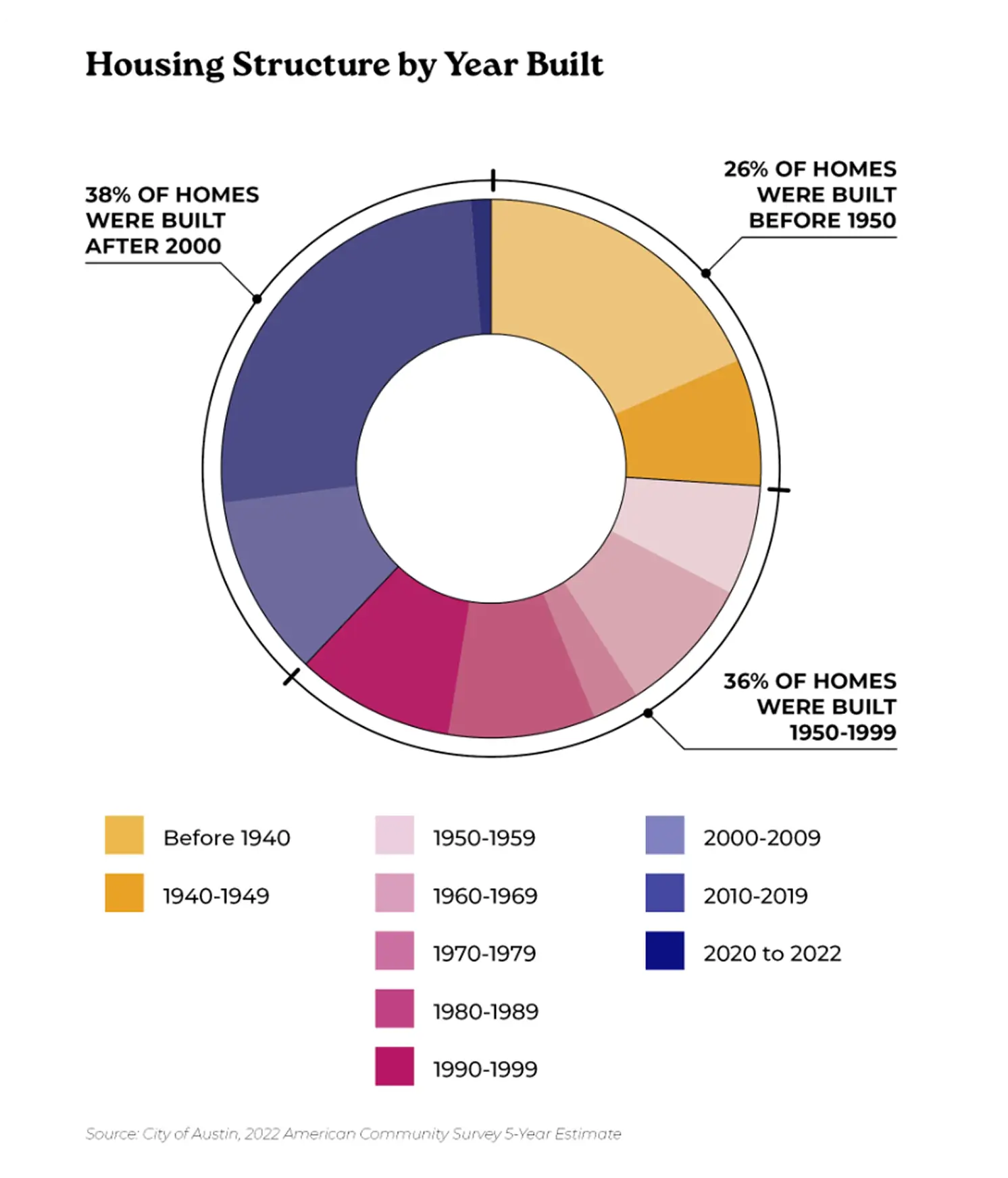
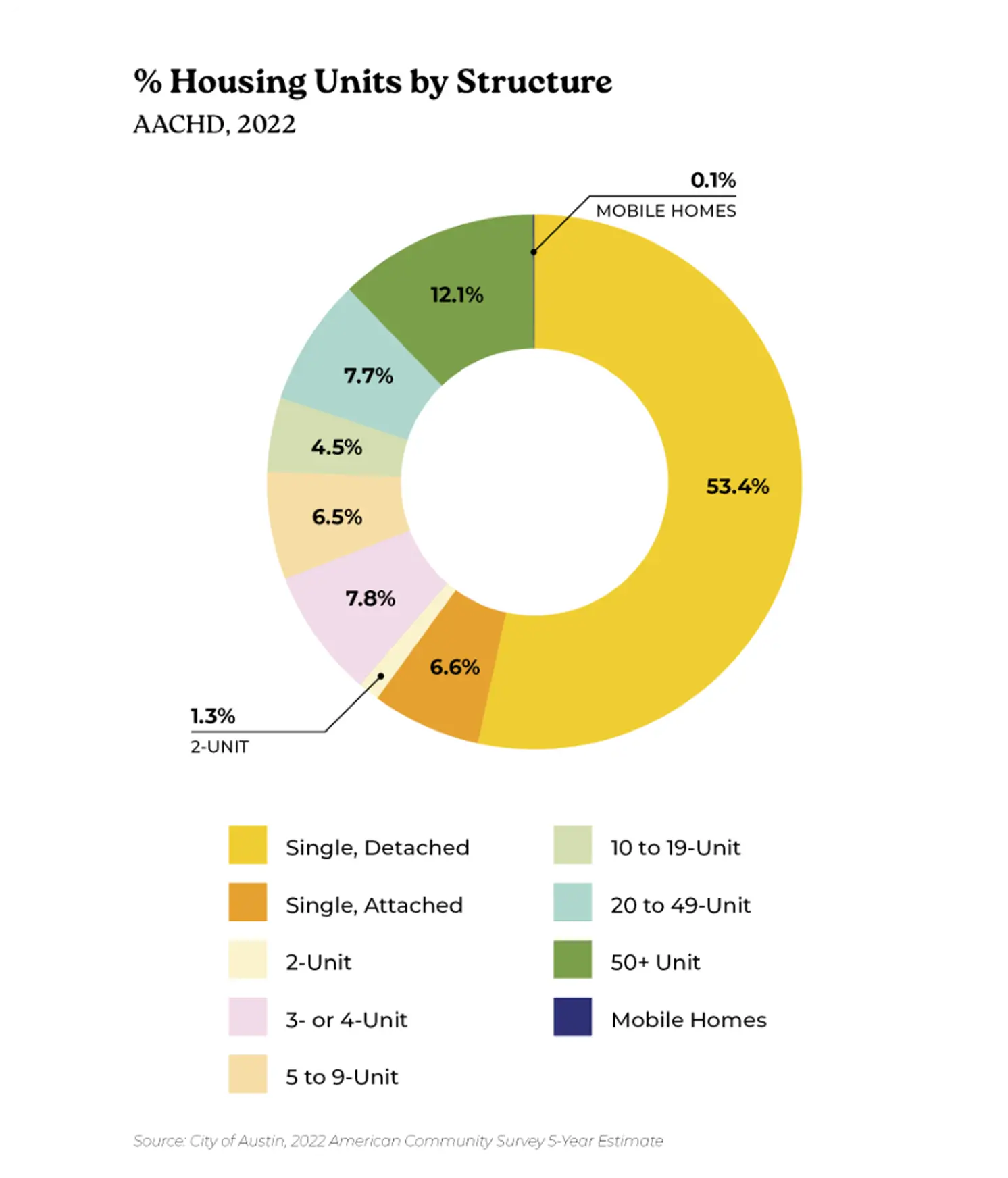
A majority of housing structures in the district were built after 2000, and over 50% are detached single-family homes.
Commercial and mixed-use development is mostly restricted along corridors and transit lines.
Historic Context: Redlining & Segregation
The 1928 Master Plan
The City of Austin’s 1928 Master Plan formalized racial segregation in Austin when it designated East Austin as the “negro district,” moving Black Austin residents from their freedman communities throughout the City into what we know today as East Austin.
1934 Redlining
The redlining of Austin in 1934, which designated a majority of the district as hazardous, has impacted the development of the area we now know as the African American Cultural Heritage District.
The Master Plan states:
Black & African American Population Trends
Between 2010 and 2020, a substantial number of Black and African American residents moved away from East Austin. While Travis County, outside of Austin, saw the largest addition of Black and African Americans (24,135 individuals), Williamson County had the highest percentage growth in Black and African American populations during this time, increasing 69.5%, which equals over 20,000 individuals, across the decade.
Population by Age Group
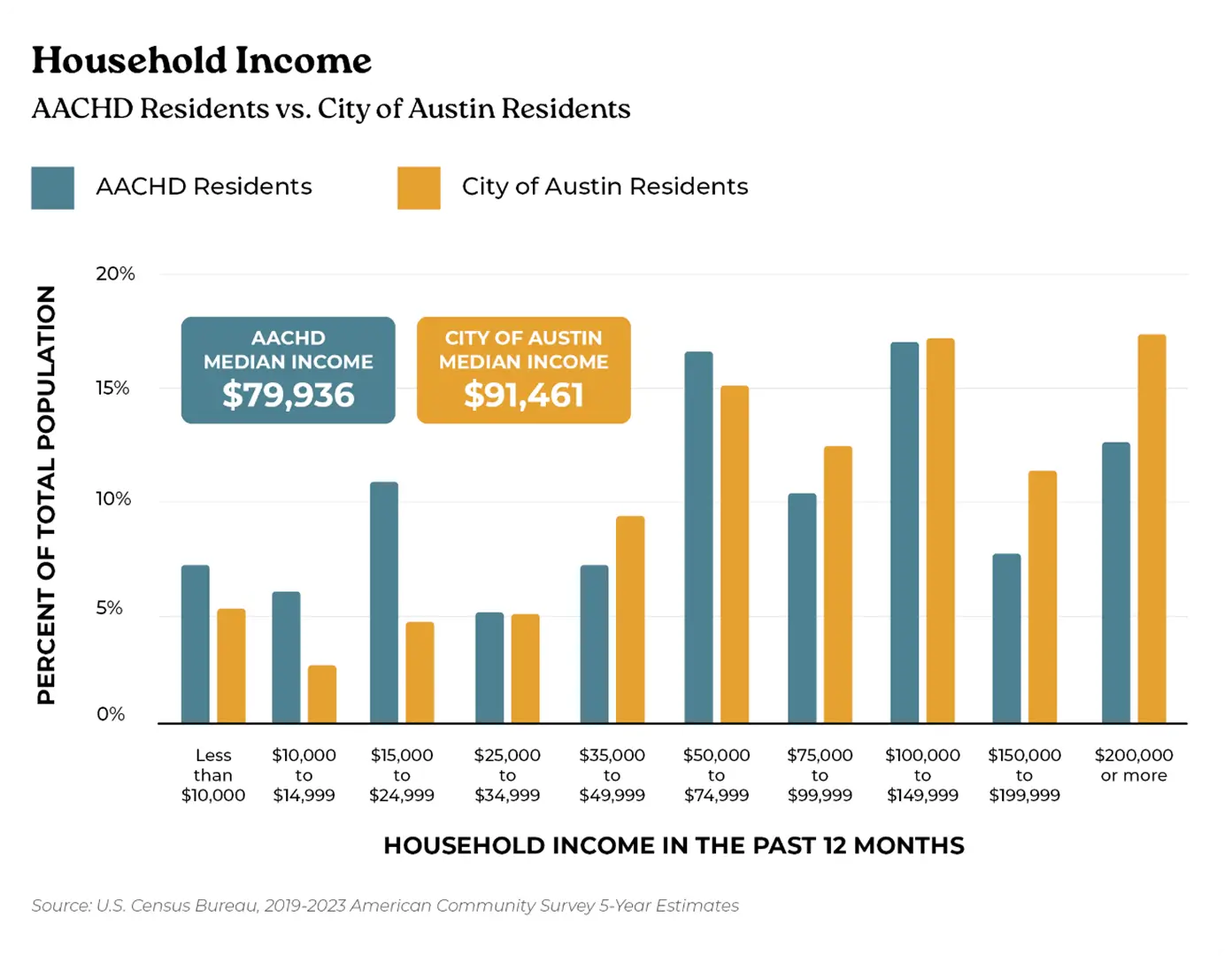
Within the AACHD, the Black and African American population shows a distinct age distribution compared to the district overall. There are fewer residents in their mid-twenties to mid-forties and more in their mid-fifties to mid-seventies. This pattern likely reflects both the aging of long-term residents and the departure or displacement of younger Black households. The limited presence of mid-twenties to mid-forties residents may be tied to housing affordability challenges and the lower average household incomes of Black and African American households relative to other groups.
Demographic Overview
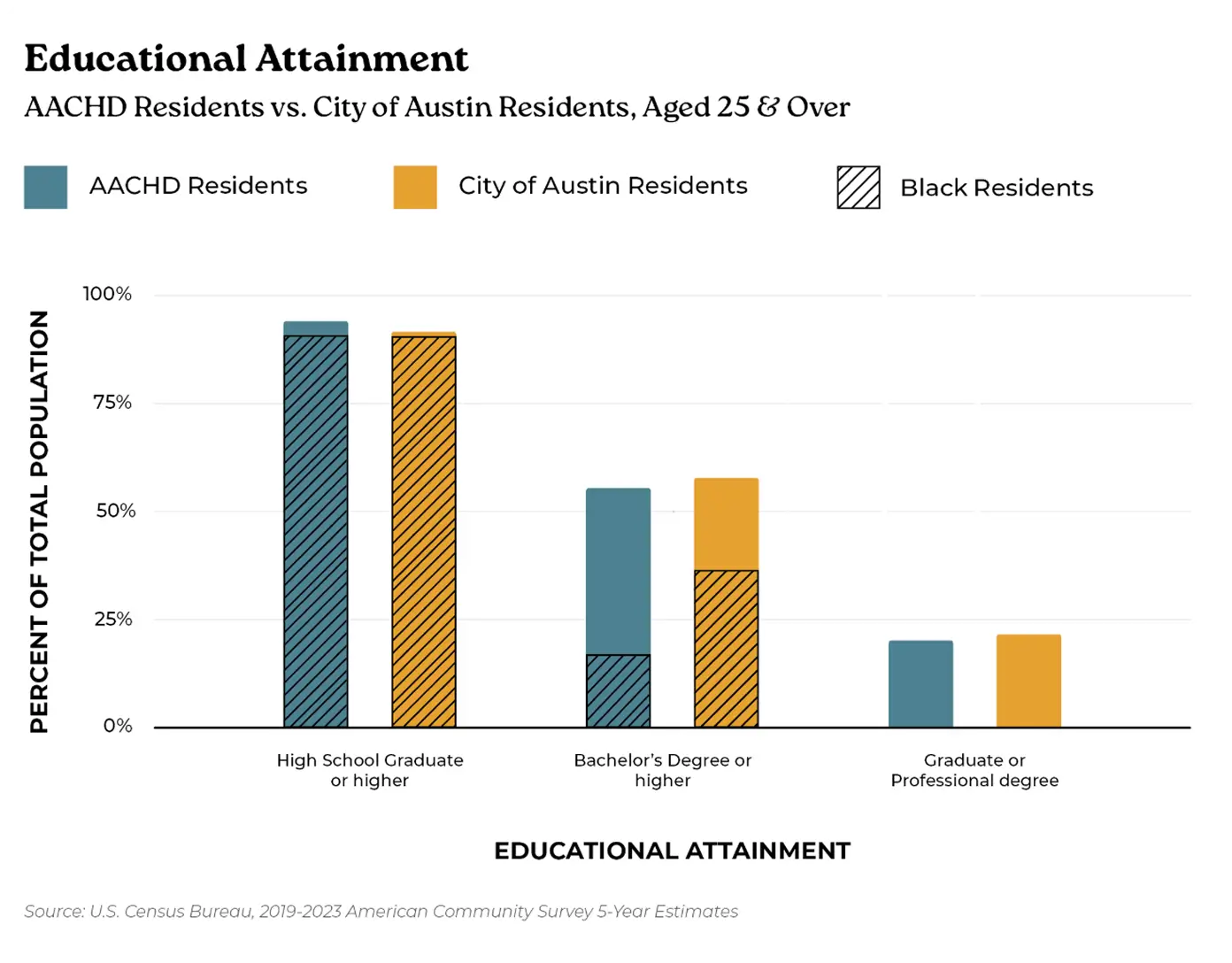
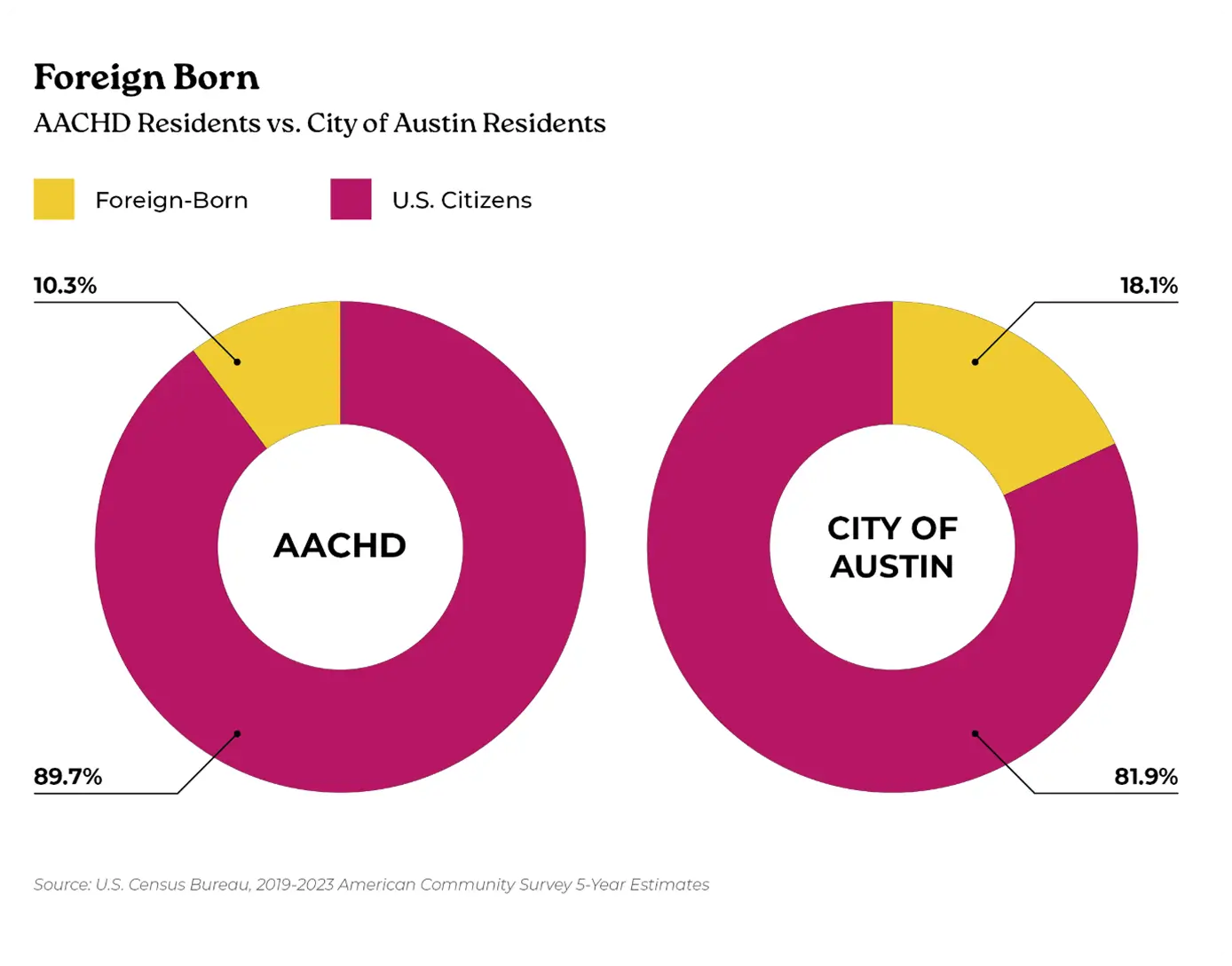
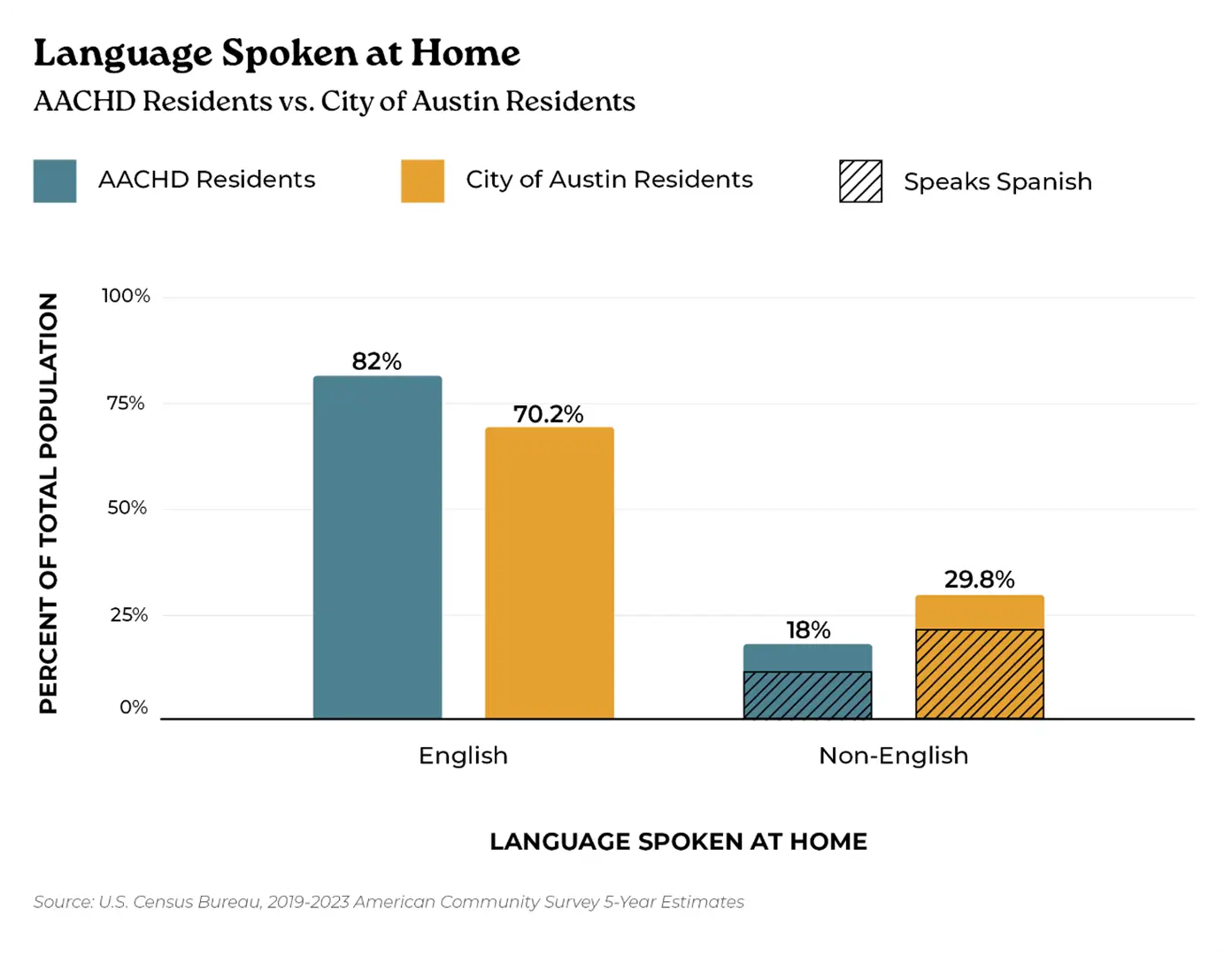
AACHD vs. City of Austin
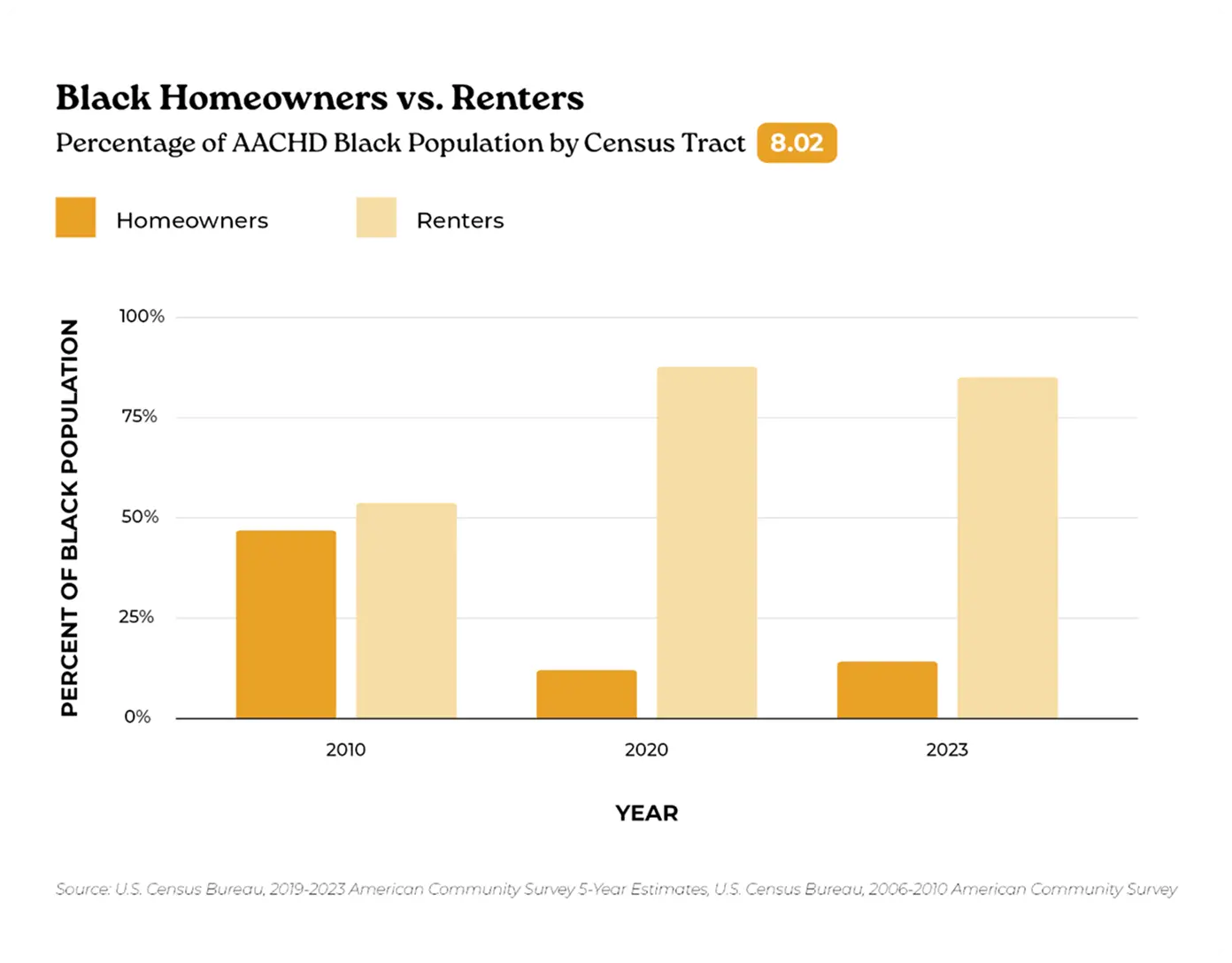
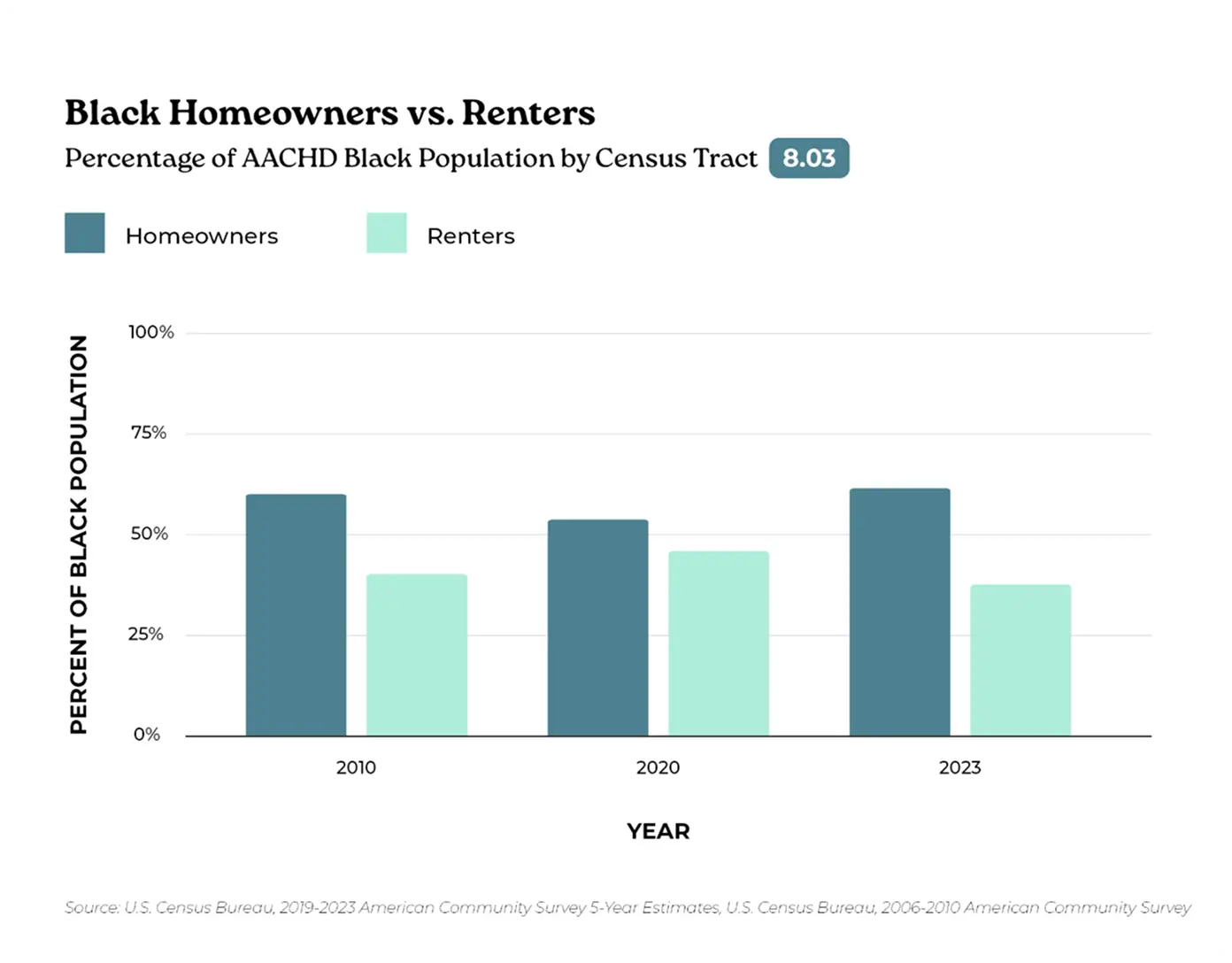
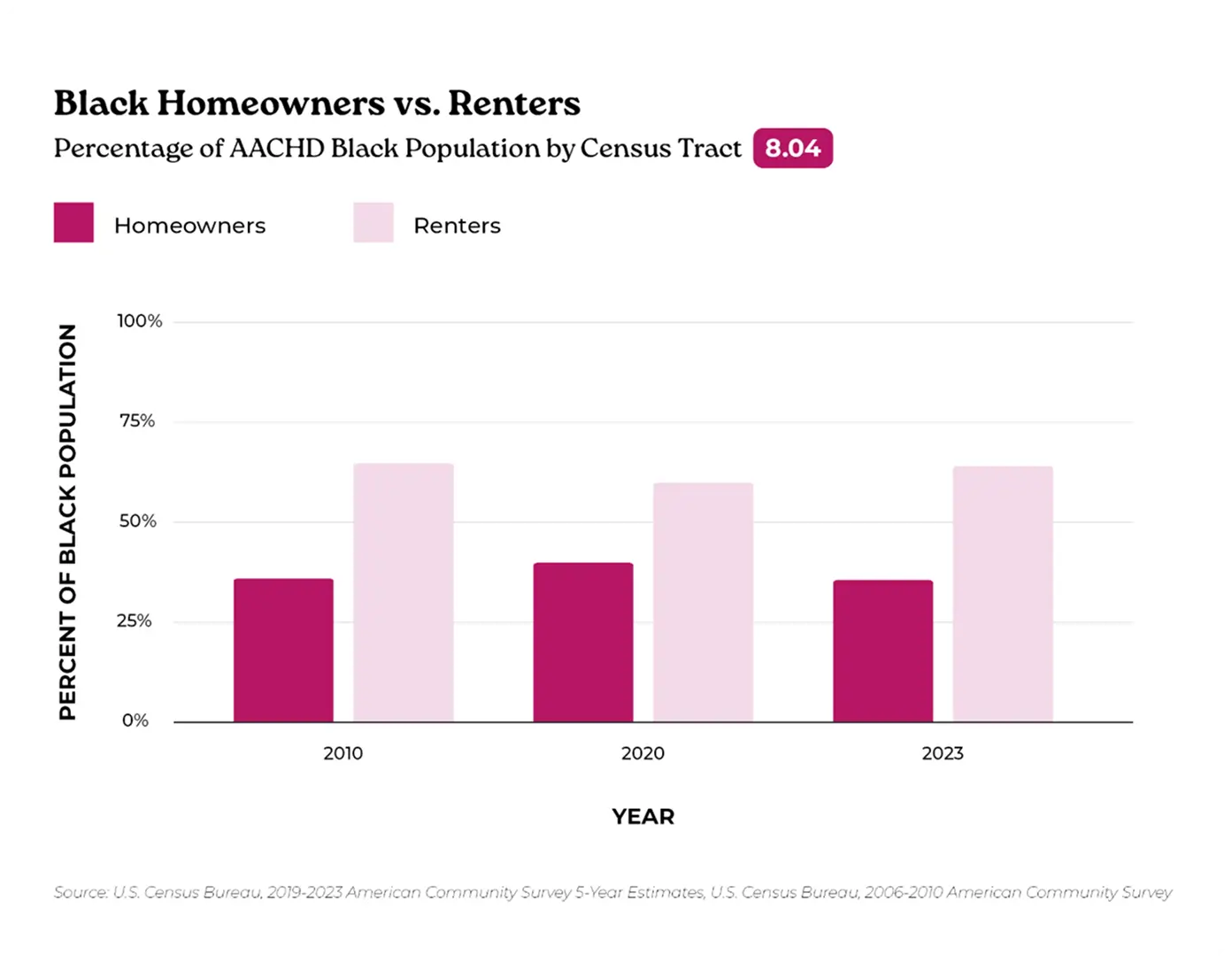
Black Homeowners vs. Renters
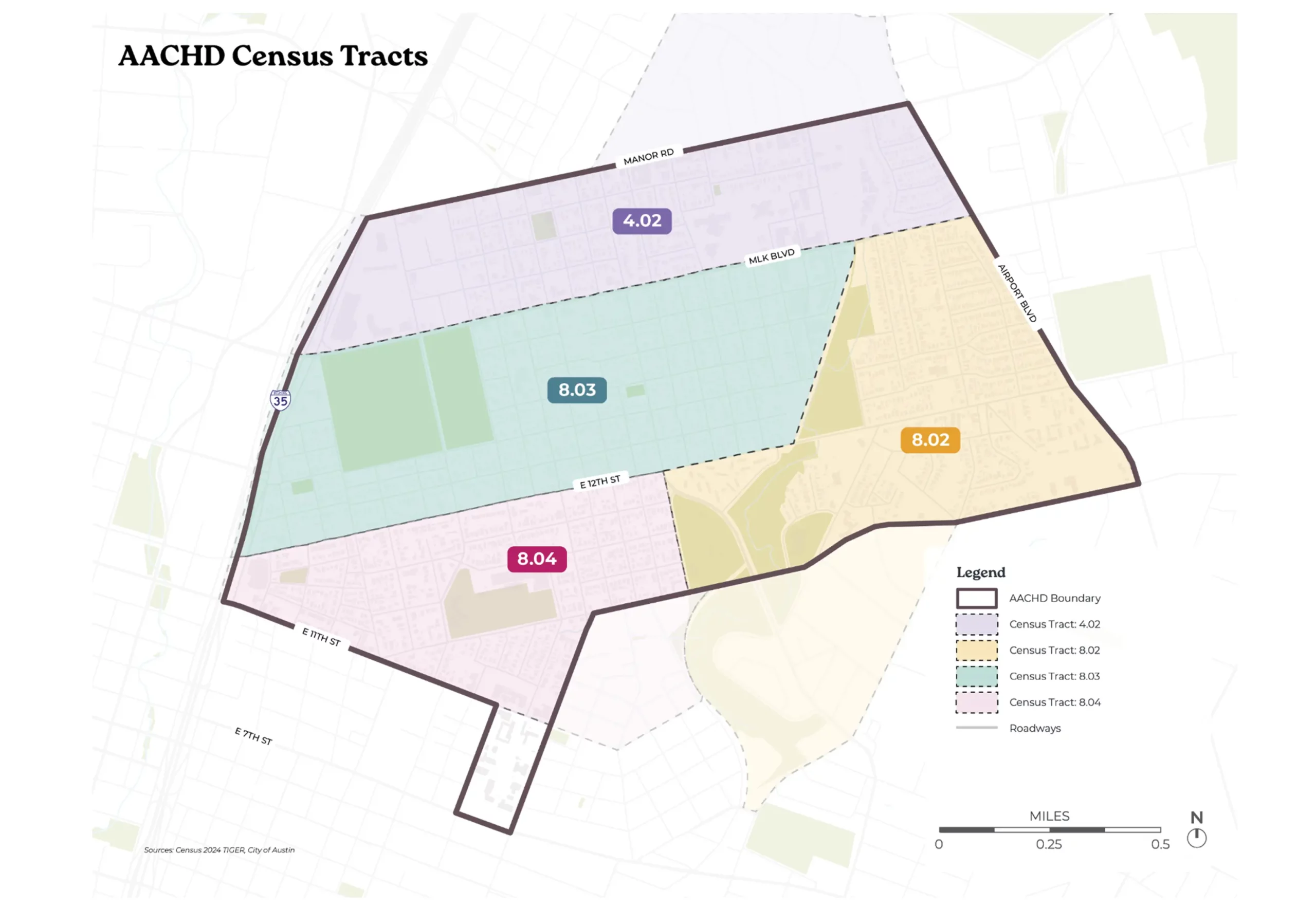
Black homeownership within the AACHD census tracts has declined significantly from 2010 to 2023, even as the number of Black renters has remained relatively stable. The trend, however, varies across the district. In the southeastern tract, Black homeownership has dropped sharply, while in the northern tract the number of Black renters has grown. These differences suggest that neighborhood-specific housing strategies will be necessary to both stabilize and increase the number of Black residents across the district.
Renters
Households are cost-burdened when they spend over 30% of their income on housing. 44.7% of renters in the District are cost-burdened. Generally speaking, housing research shows us that when households are burdened with rent so significantly they often need to make challenging trade-offs on how to spend their money on monthly costs.
Structures by Year Built & Neighborhoods
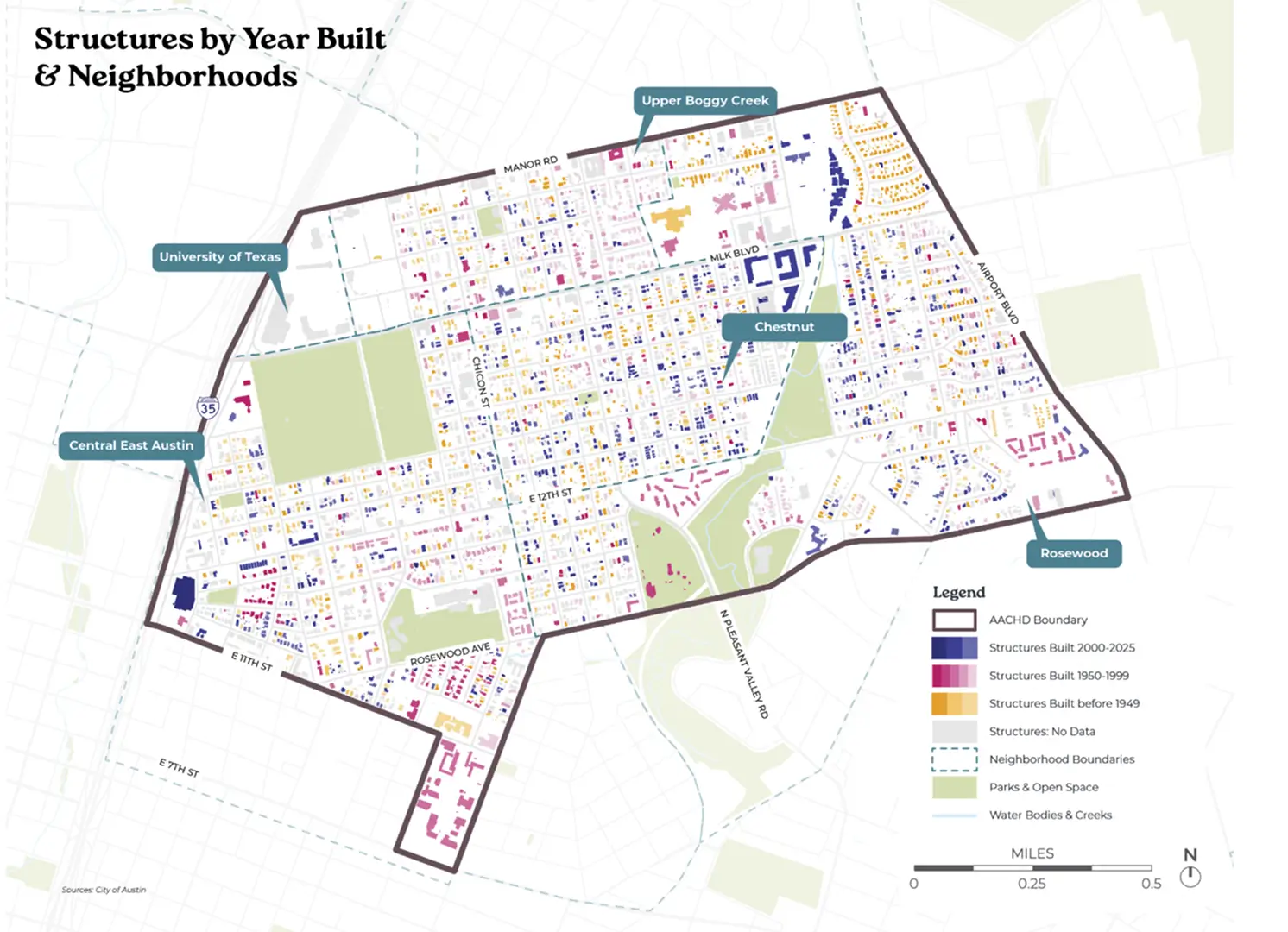
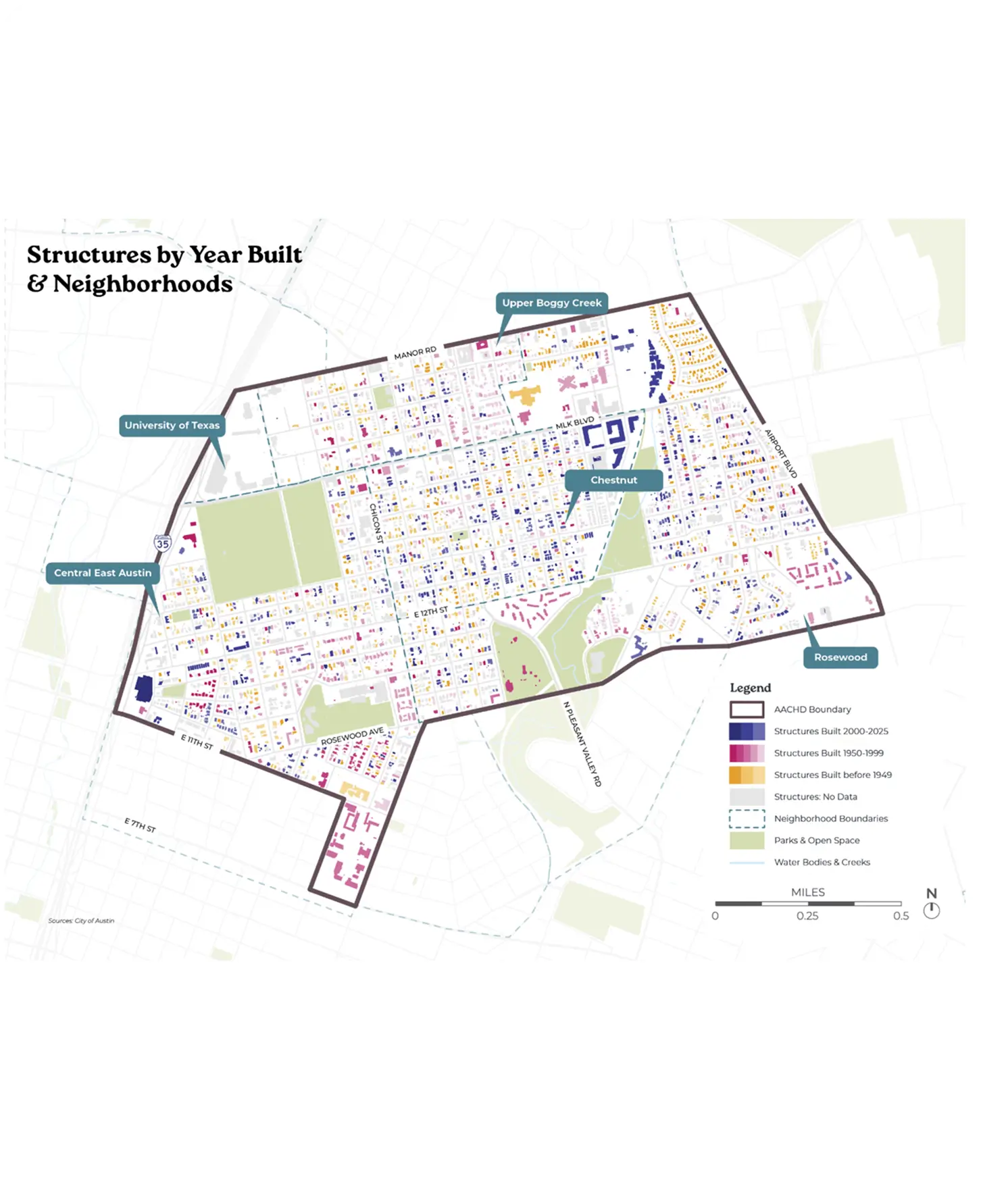
Structures in the AACHD are relatively new, on average, in comparison to the age of the neighborhood. In fact, 37.9% of the structures in the AACHD have been built since the year 2000. Conversely, only 26% percent of the structures predate the year 1950. Preserving the remaining older homes could be a significant goal of this process.
By units per building, 53.4% of the housing structures in the AACHD are single-family houses. The next highest category is 50+ unit structures at 12.1% of the housing structures in the AACHD. While the number of housing units produced has gone up significantly in the past 10 years, the average rent per unit has gone from $1,616 in 2016 to $1,858 in 2025 YTD.